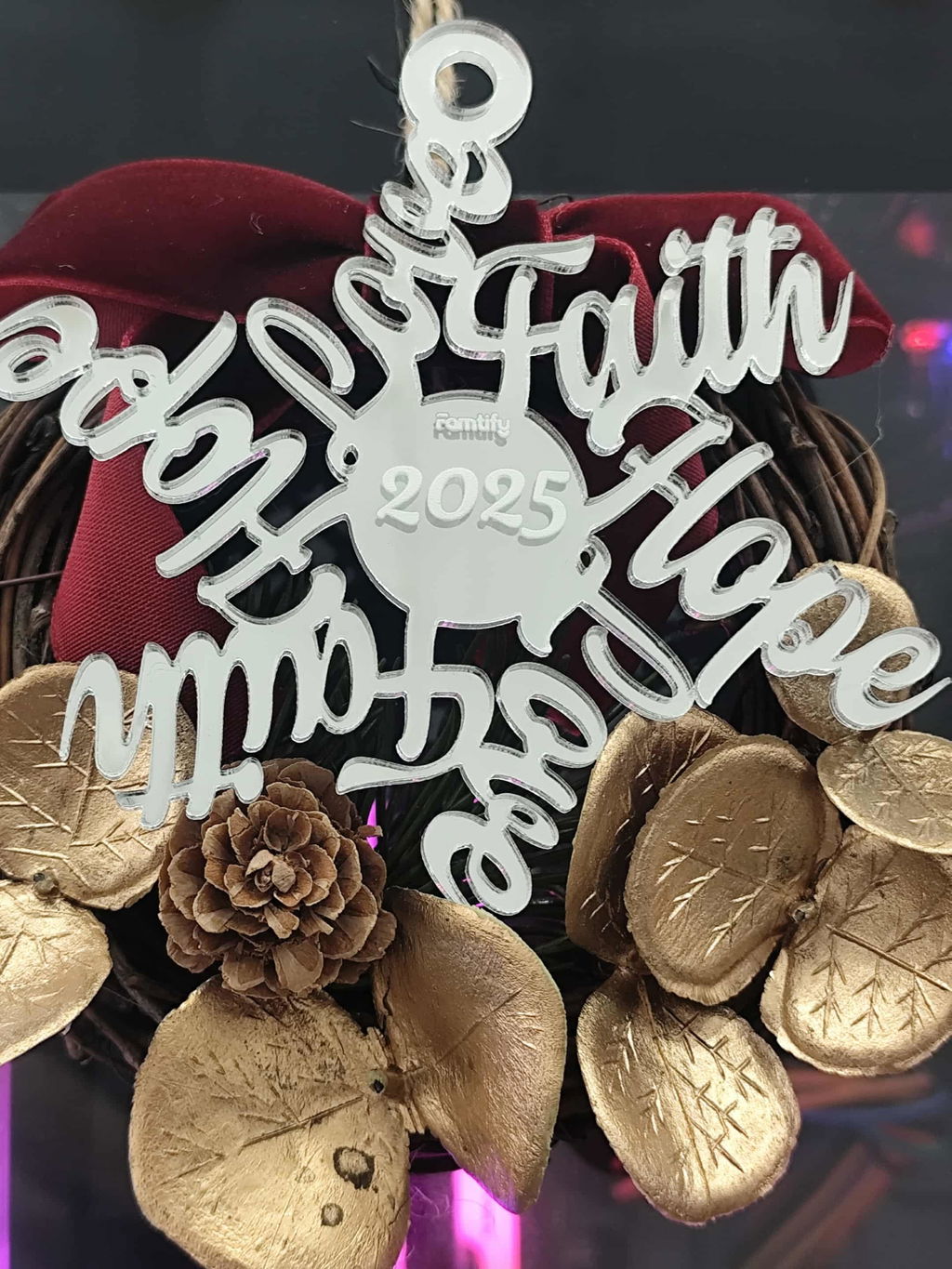
Christmas Keepsakes: What Makes Something Worth Keeping
Share
Open any family's box of kept things and the contents are strange. A cheap ornament survives while an expensive vase is long gone. A scrap of card outlives a piece of jewellery.
Keepsakes are not selected by value. They are selected by a small set of qualities, and once you can see them you can choose a keepsake deliberately rather than hoping.
It has to be specific to one moment
A generic beautiful object belongs to nobody in particular, so nothing is lost by letting it go. An object marked with a name, a year or an event is tied to a specific moment, and throwing it away feels like throwing the moment away.
This is why dated pieces survive at such a high rate. The date does the work.
It has to be small
Keepsakes survive house moves, and house moves are ruthless. Anything that takes real space has to earn that space repeatedly across decades.
Small things get kept almost by default, because the cost of keeping them is close to zero. This is the practical reason ornaments have such a high survival rate compared with larger decorative gifts. Browse Christmas ornaments.
It has to come out again
An object stored permanently in a box slowly becomes invisible, and invisible things get discarded during a clear out.
Objects with a yearly ritual attached, brought out each December and put away each January, get handled thirty or forty times over a lifetime. Every one of those moments renews the attachment. This is the single strongest predictor of survival, and it is why Christmas keepsakes outlast keepsakes from any other occasion.
It has to be irreplaceable
If something can be bought again, losing it is an inconvenience rather than a loss. If it carries a photograph, a name, a handwritten line or a date, no replacement exists.
That is also why keepsakes are worth ordering carefully rather than quickly. The value is in the specific details being right.
Choosing one on purpose
Put those four together and the formula is unglamorous but reliable: something small, dated, personal, and used once a year.
That describes an ornament, a stocking, a small framed piece. It does not describe most of what gets given at Christmas, which is precisely why most of what gets given at Christmas is gone within two years. See family keepsakes.
Frequently asked questions
Does an expensive gift last longer than a cheap one?
Not reliably. Price influences how guilty people feel about discarding something, but it does not create attachment. A cheap dated ornament routinely outlives expensive undated homeware.
Can something become a keepsake later?
Yes, usually by accident, when an ordinary object becomes associated with a person after they are gone. You cannot plan for that, which is the argument for marking things deliberately while you can.
What about digital keepsakes like photo albums?
Digital archives are excellent for volume and poor for ritual. Nobody gathers around a hard drive each December. Physical and digital do different jobs, and the physical object is what gets handled.
Is it strange to buy a keepsake for yourself?
Not at all. Families who buy one ornament a year for themselves end up with the trees that everyone else envies. Waiting for someone else to think of it is how decades pass unmarked.
What if the recipient is not sentimental?
Choose something functional with a small personal detail rather than a display piece. A used object with a name on it works for people who dislike ornaments on principle. See personalized mugs.
Small, dated, personal, annual
That is the whole formula. Browse personalized Christmas gifts or start with ornaments.