How to Write a Christmas Card Message That Is Not Generic
Share
Most Christmas cards say the same four things: happy Christmas, hope you are well, have a good one, see you soon. They are written quickly, read in two seconds and recycled in January.
The ones people keep in a drawer for years are not longer. They are just specific.
The three line method
Almost any good card message has the same shape, and it takes about a minute to write.
- Something specific from this year. Not "hope you had a good year" but the actual thing. The move, the new job, the surgery that went well, the dog.
- Something you appreciate about them. Concrete, not flattering. "You are the only person who checks in without being asked" beats "you are wonderful".
- Something forward looking. A plan, an invitation, or simply what you hope for them.
Three lines. It works for a grandparent, a neighbour or a colleague, and it is impossible to mistake for a card that could have been sent to anyone.
Why specificity beats warmth
Warm generic writing sounds pleasant and communicates nothing, because the recipient knows it could have been copied into thirty other cards.
One concrete detail proves the opposite. It shows you were paying attention during the year, which is the actual message underneath every card anybody sends.
Difficult cards
Someone who has been bereaved. Say the person's name. The widespread fear of upsetting someone by mentioning their loss usually produces a card that ignores the largest fact of their year, which hurts more. "This will be a hard one without David" is kind, not clumsy. See sympathy gifts.
Someone you have drifted from. Acknowledge it lightly rather than pretending. "I am bad at staying in touch and I still think about you often" is honest and opens a door.
Someone far away. Write more than you would in person, because the card is standing in for a conversation that will not happen. See family keepsakes.
Someone you barely know. Keep it short and specific to the context you share. A colleague card that mentions one real thing from the working year beats a warm one that could go to anyone in the building.
If the card goes with a gift
The card and the gift should not repeat each other. If the gift is personalized and already carries a name, a date or a photo, the card is where the explanation and the feeling go.
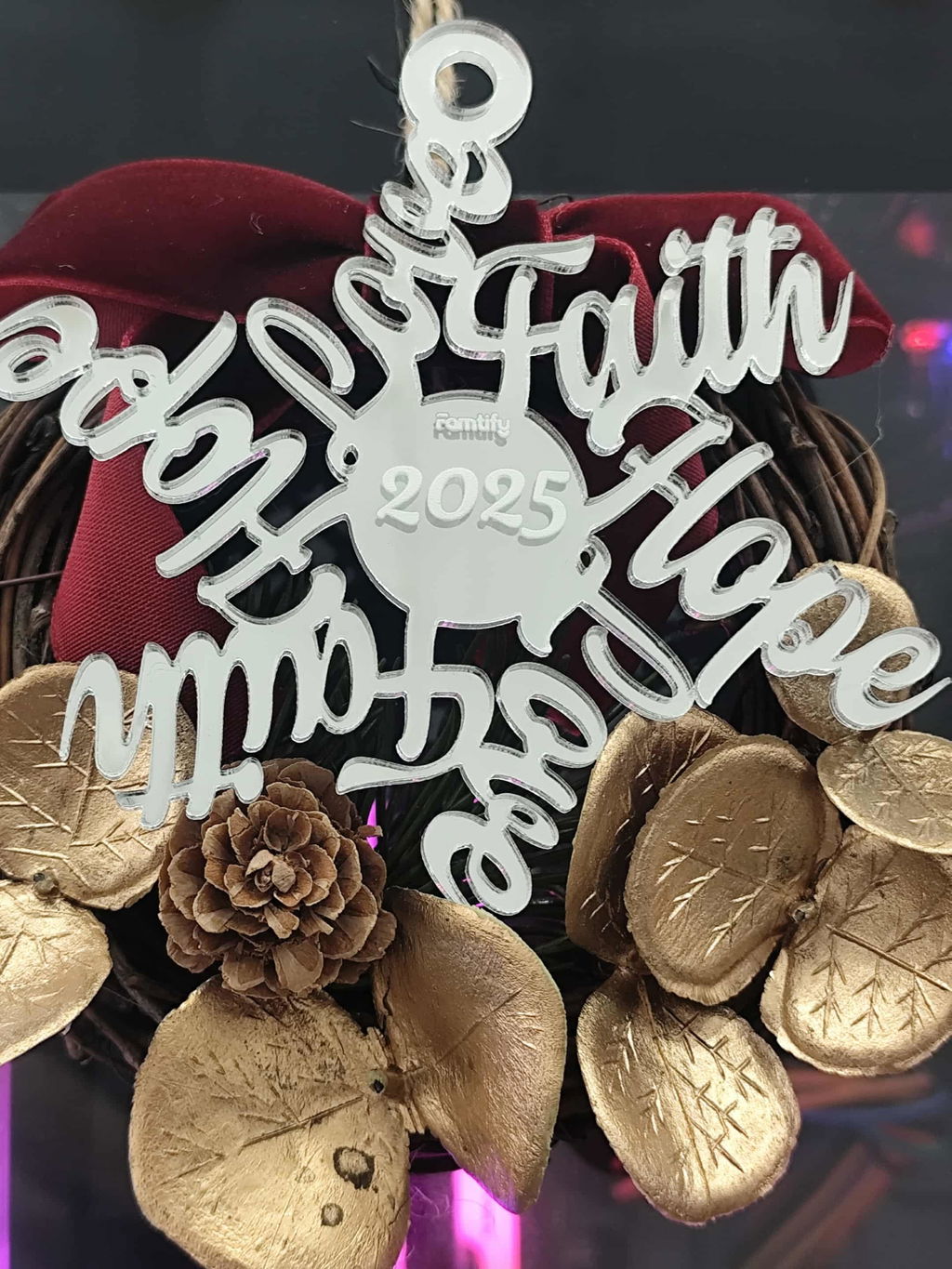
This is particularly true for keepsakes. An ornament says whose year it was; the card says why you chose it. Twenty years later the ornament is on the tree and the card is in the box underneath, and both are still doing their job. Browse personalized ornaments.
Frequently asked questions
How long should a Christmas card message be?
Three or four sentences is plenty for most people, and more for someone you rarely see. Length is not the point; specificity is. A short specific note beats a long vague one.
Is it acceptable to type or print card messages?
For a large family newsletter, yes. For an individual card, handwriting is a meaningful part of the object, and it is the reason cards get kept. Untidy handwriting is not a problem; nobody has ever kept a card because the writing was neat.
What if I genuinely cannot think of anything specific?
Then say something honest about that. "I have not seen you nearly enough this year and I want to change that in 2027" is specific by being true, which is all the method requires.
Should I sign from the whole family?
Fine for acquaintances. For close relationships, one person writing in their own voice lands better than a list of names in one handwriting.
What do I write for a first Christmas after a birth?
Address the parents as much as the baby. New parents receive an enormous amount aimed at the child and very little aimed at them. See baby gifts.
One real detail
That is the whole method. Browse personalized Christmas gifts to give the card something worth explaining.